Imagine a customer named Sarah. She calls your support line on Monday regarding a billing error and gets a swift, empathetic resolution. Thrilled, she emails on Tuesday with a follow-up question about her account. But this time, the response is cold, delayed, and technically inaccurate.
Sarah’s opinion of your brand just plummeted. Why? Because consistency is the currency of trust.
In a modern support environment, customers don’t see “voice support” and “email support” as different departments. They see one brand. If your quality assurance (QA) strategy treats these channels as silos, your customer experience (CX) will feel fragmented.
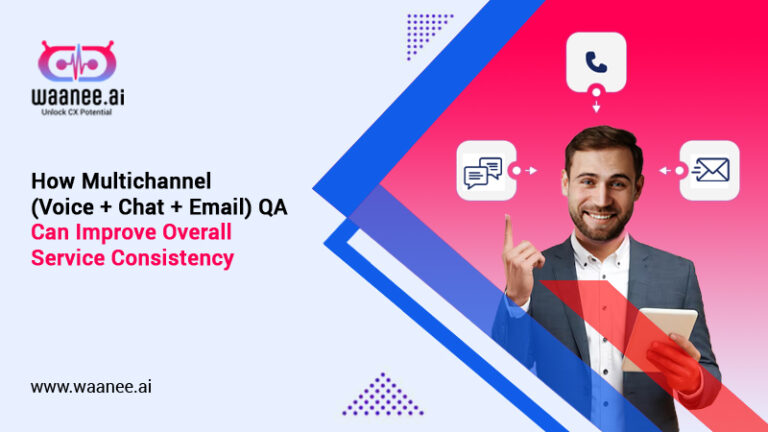
This guide explores how multichannel QA bridges the gap between voice, chat, and email, creating the unified customer experience your audience demands.
The Reality of the Omnichannel Contact Center
The shift to an omnichannel contact center wasn’t just about adding more ways to talk. It was about continuity. The goal was to let a conversation start on chat, move to a phone call, and finish via email without losing context.
However, many organizations scaled their channels faster than their QA processes. You might have a robust QA scorecard for phone calls, evaluating tone, empathy, and script adherence. Meanwhile, chat logs are spot-checked only for grammar, and emails are barely reviewed at all.
This disparity creates “service personality disorders.” Your phone agents are warm and helpful, but your chat bots or agents are robotic and dismissive.
The Cost of Inconsistency
When service quality varies by channel, customers learn to game the system. They might avoid your efficient chat system because they know they get better answers on the phone. This drives up call volumes and defeats the purpose of offering lower-cost digital channels.
Inconsistent service also:
- Erodes Trust: Customers wonder which version of the company is the “real” one.
- Increases Churn: A bad experience on a secondary channel can undo years of loyalty built on a primary one.
- Confuses Agents: If agents work across multiple channels, inconsistent QA standards leave them unsure of what “good” looks like.
Why Multichannel QA is the Solution
Multichannel QA is the practice of evaluating interactions across all mediums using a unified framework. It doesn’t mean using the exact same scorecard for every channel—you can’t judge active listening on an email the same way you do on a call—but it does mean aligning them under the same standards of quality.
By implementing a holistic QA strategy, you gain a 360-degree view of agent performance and customer sentiment.
1. Aligning Brand Voice Everywhere
Your brand voice should be recognizable whether a customer is hearing it or reading it. Multichannel QA ensures that the tone used in a voice call matches the tone in a chat window.
For example, if your brand is “friendly and casual,” your phone agents likely use conversational language. If your email templates are stiff and overly formal (“Dear Sir/Madam, regarding your inquiry…”), you have a consistency problem.
QA scorecards tailored for multichannel review can catch these discrepancies. You can score “Brand Voice Alignment” across all mediums, coaching email agents to loosen up and phone agents to stay professional, ensuring a meeting point that defines your brand.
2. Spotting Knowledge Gaps with Cross-Channel Analytics
One of the most powerful aspects of modern QA is cross-channel analytics. This involves analyzing data from voice, chat, and email simultaneously to find patterns that a single-channel view would miss.
Let’s say your voice QA scores are high for “Technical Troubleshooting,” but your chat satisfaction scores are tanking. Without cross-channel analysis, you might blame the chat agents.
However, a deeper dive might reveal that your chat agents lack access to the same diagnostic tools as phone agents. Or perhaps the complex troubleshooting steps are too long to type out effectively in a chat window. Cross-channel analytics highlights these friction points, allowing you to build better knowledge base articles or macros specifically for chat agents.
3. Creating a Unified Customer Experience
A unified customer experience means the customer feels known and valued regardless of the medium.
Multichannel QA helps verify that context is being carried over. When auditing a ticket that moved from chat to email, a QA analyst should ask:
- Did the email agent acknowledge the previous chat?
- Did the customer have to repeat information?
- Was the resolution consistent with what the chat agent promised?
If you only QA the email in isolation, you might grade it a 100% because the grammar was perfect and the answer was correct. But if you view it as part of a journey, you might fail it because the agent ignored the context provided three hours earlier on chat. This holistic view is the only way to truly improve CX.
Implementing a Multichannel QA Framework
Moving from siloed QA to a multichannel approach requires a strategic shift. Here is how to begin refining your process.
Standardize Core Competencies
While the mechanics of a call differ from an email, the core competencies of service remain the same. Build your framework around these universal pillars:
- Soft Skills: Empathy, tone, and politeness apply to text just as much as voice.
- Process Adherence: Did they follow the correct security verification steps?
- Solution Accuracy: Was the information provided correct?
- First Contact Resolution (FCR): Did the agent solve the issue, or did it require a follow-up?
By weighting these categories similarly across channels, you can compare apples to apples. You can say, “Agent Mike has a 90% accuracy rating,” encompassing his work on phones and email.
Adapt Scorecards for Channel Nuances
While core competencies align, specific criteria must adapt.
Voice QA Checklist:
- Did the agent use active listening techniques?
- Was the pace of speech appropriate?
- Did they minimize dead air?
Chat/Email QA Checklist:
- Was the response time acceptable?
- Was the grammar and formatting professional?
- Did they use approved macros correctly?
- Was the “chat manner” appropriate (e.g., avoiding all caps)?
Calibrate Your QA Team
If your QA team is split into “Voice QA” and “Digital QA,” consider merging them. A QA analyst who only reviews calls will develop “blind spots” regarding the challenges of written communication.
Rotate your QA staff. Have them evaluate a mix of interactions. This helps them understand the full agent experience and ensures they grade consistently. Calibration sessions—where multiple analysts grade the same interaction—are vital here. Discussing a complex chat interaction as a group ensures everyone agrees on what constitutes a “unified experience.”
The Role of Technology in Multichannel QA
Manual QA can only cover about 1-2% of total interactions. In a high-volume omnichannel contact center, this isn’t enough to guarantee consistency.
This is where AI and automation come into play. Modern QA platforms can ingest 100% of interactions across all channels. They transcribe calls and analyze text logs simultaneously.
Automated Sentiment Analysis:
AI can track customer sentiment across channels. It can flag that customers are generally happier on the phone than on email. This alerts managers to investigate the email process—perhaps the SLAs are too long, or the templates are too robotic.
Topic Clustering:
Auto-QA tools can identify trending topics. If you see a spike in “refund requests” on chat but not on voice, it might indicate that the chat bot is incorrectly routing refund inquiries to live agents, or that a specific marketing email triggered questions that people prefer to type rather than ask aloud.
The Payoff: Seamless Service
When you master multichannel QA, the results are tangible.
Agents feel more supported because they receive holistic coaching rather than disjointed feedback from different supervisors. Customers stop “channel hopping” to find the best service, which stabilizes volume and allows for better workforce planning.
Most importantly, your brand becomes reliable. Whether a customer is tweeting for help at midnight, calling during their lunch break, or sending a detailed email on a Sunday, they receive the same high standard of care.
Ready to deliver seamless, consistent service across all your channels? Discover how Waanee.ai’s multichannel QA solutions can unify your customer experience and drive results. Learn more at Waanee.ai.
Next Steps for Managers
If you are ready to improve your service consistency, start small:
- Audit your current scorecards: Do your email and voice criteria share any common goals?
- Run a cross-channel sample: Pick five random customer journeys that involved multiple channels and audit the entire interaction chain.
- Investigate analytics: Look at your CSAT scores by channel. If there is a variance of more than 5%, you have a consistency gap to close.
Consistency doesn’t happen by accident. It is engineered through rigorous, thoughtful, and unified Quality Assurance. By breaking down the walls between your channels, you build a stronger foundation for your customer relationships—and with Waanee.ai’s multichannel QA expertise, you can achieve seamless, reliable service across every touchpoint. Start creating a truly unified customer experience with Waanee.ai today.

 Recruit Industries Agents
 Build Your Agent
 Improve Self Service
 Employee Experience
 Sales and Cross Sales
 Calling Script
 Integration & APIs
 Auto Summarization
 Conversational Intelligence
 Sentiment Analytics
 Auto QA
 Net Promoter Score